Trezor
Trezor Model One
RateMyWallets is reader-supported. When you buy through links on this page, we may earn a commission at no extra cost to you.
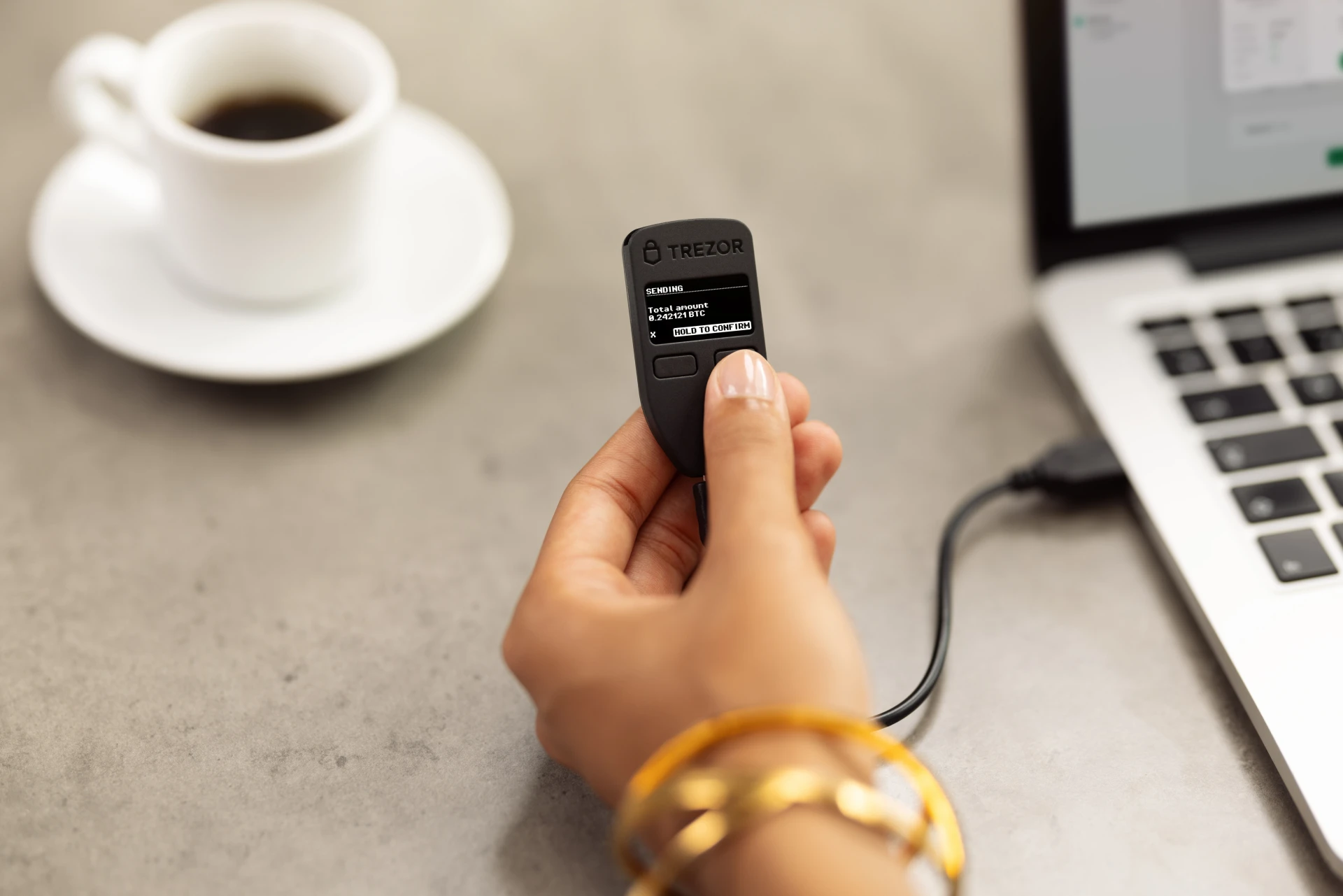
We may earn a commission if you purchase through this link.
The Trezor Model One is the pioneering 2014 hardware wallet that created the cold storage industry. While its open-source track record is legendary, its legacy Micro-USB port, lack of a Secure Element chip, and missing support for Solana and Cardano mean that most buyers today will be much better served by the Trezor Safe 3 for just $10 more.
Security Spotlight
- PIN protection with scrambled matrix
- BIP-39 Passphrase support for hidden wallets
- 100% Open-source hardware and firmware
- Physical two-button transaction verification
- Deterministic key generation (BIP-32/39/44)
Pros
- •Affordable entry-level price point
- •100% open-source firmware and hardware architecture
- •Over 10 years of proven real-world security track record
- •Seamless integration with Trezor Suite desktop and web app
- •Physical two-button confirmation prevents unauthorized transactions
Cons
- •Uses outdated Micro-USB connector instead of USB-C
- •No Secure Element chip (passphrase strongly required against physical attacks)
- •Missing native support for major blockchains like Solana, Cardano, and XRP
- •Scrambled on-screen PIN entry is less convenient than touchscreen models
- •Trezor Safe 3 offers vastly superior hardware for only $10 more
Full Review
Trezor Model One Review
The Trezor Model One (released in 2014 by SatoshiLabs) is the legendary pioneer that established the entire cryptocurrency hardware wallet industry. Over a decade later, it remains one of the most widely recognized cold storage devices in the world. However, the hardware security landscape has shifted dramatically, and modern crypto users need to understand where the Model One still excels—and where its aging hardware shows its limits.
Design and Hardware Limitations
The Model One features an ultra-lightweight plastic chassis weighing just 12 grams, equipped with a small monochrome OLED display and two physical buttons:
- Display & Navigation: The 0.96-inch OLED screen displays transaction addresses and confirmation prompts. Navigation is straightforward using the two tactile buttons, but verifying long addresses requires scrolling.
- Micro-USB Connector: The device still uses an older Micro-USB port rather than modern USB-C. While functional, it requires carrying a legacy cable or adapter when connecting to modern laptops.
- Scrambled PIN Entry: Unlike the touchscreen on the Model T or Safe 5, entering your PIN on the Model One requires looking at a 3x3 scrambled keypad on the device screen while clicking blind number positions in the Trezor Suite app on your computer.
Security Architecture: Open-Source vs. Physical Attack Vectors
Security on the Trezor Model One is rooted in SatoshiLabs’ commitment to 100% open-source firmware and hardware:
- Open-Source Transparency: The entire codebase is publicly auditable, ensuring no hidden backdoors or proprietary firmware blobs.
- No Secure Element Chip: The Model One uses a general-purpose microcontroller (STM32F05) rather than a certified Secure Element chip (such as the EAL6+ chips in the Trezor Safe series or Ledger devices).
- The Critical Role of Passphrase: Because it lacks a Secure Element, the device is vulnerable to physical fault-injection attacks (voltage glitching) if a sophisticated attacker gains physical possession. SatoshiLabs strongly recommends enabling a strong BIP-39 passphrase, which mathematically encrypts your keys in memory and neutralizes physical extraction threats.
Asset Support Gaps
While the Model One supports thousands of ERC-20 tokens, Bitcoin, and Ethereum, its constrained memory creates noticeable gaps in modern blockchain support:
- Unsupported Major Coins: The Model One does not support Solana (SOL), Cardano (ADA), Ripple (XRP), Monero (XMR), or Tezos (XTZ).
- Supported Core Ecosystems: Full native support for Bitcoin (BTC), Ethereum (ETH), Litecoin (LTC), Dogecoin (DOGE), and all EVM chains via Trezor Suite or MetaMask.
Trezor Model One vs. Trezor Safe 3
In 2026, the Model One faces stiff internal competition from the Trezor Safe 3 ($79):
| Feature | Trezor Model One ($69) | Trezor Safe 3 ($79) |
|---|---|---|
| Secure Element | None | EAL6+ Certified Chip |
| Connector | Micro-USB | USB-C |
| Solana & Cardano Support | ❌ No | ✅ Yes |
| Shamir Backup (SLIP39) | ❌ No | ✅ Yes |
For just $10 more, the Trezor Safe 3 provides modern USB-C, an EAL6+ Secure Element, Shamir multi-share backups, and full Solana/Cardano compatibility.
RateMyWallets Verdict
The Trezor Model One remains a functional, budget-friendly Bitcoin and Ethereum cold storage device backed by an unrivaled 10-year track record. However, for everyday users in 2026, its Micro-USB port, missing Secure Element, and lack of Solana/Cardano support make the Trezor Safe 3 a significantly better purchase.