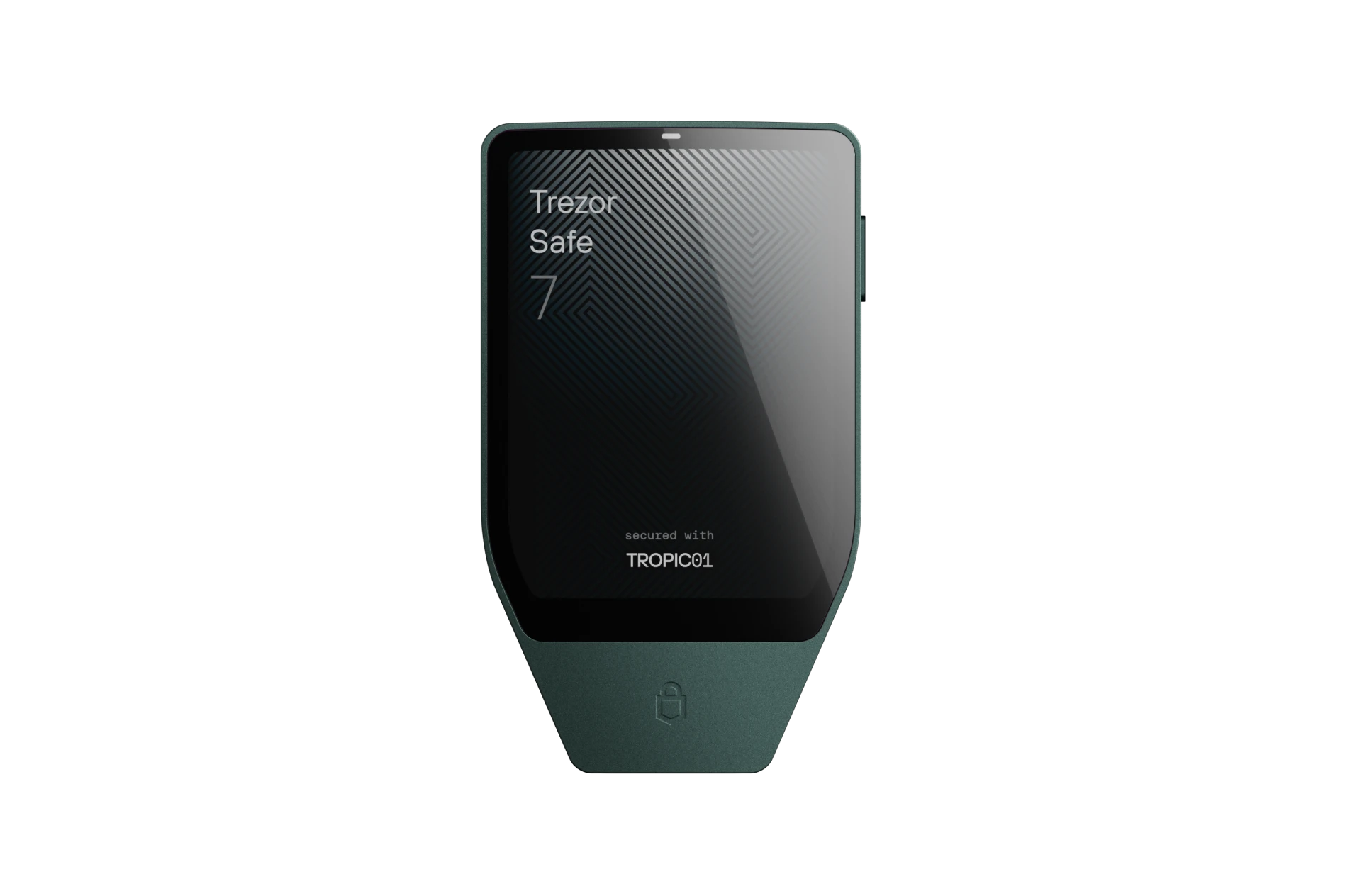
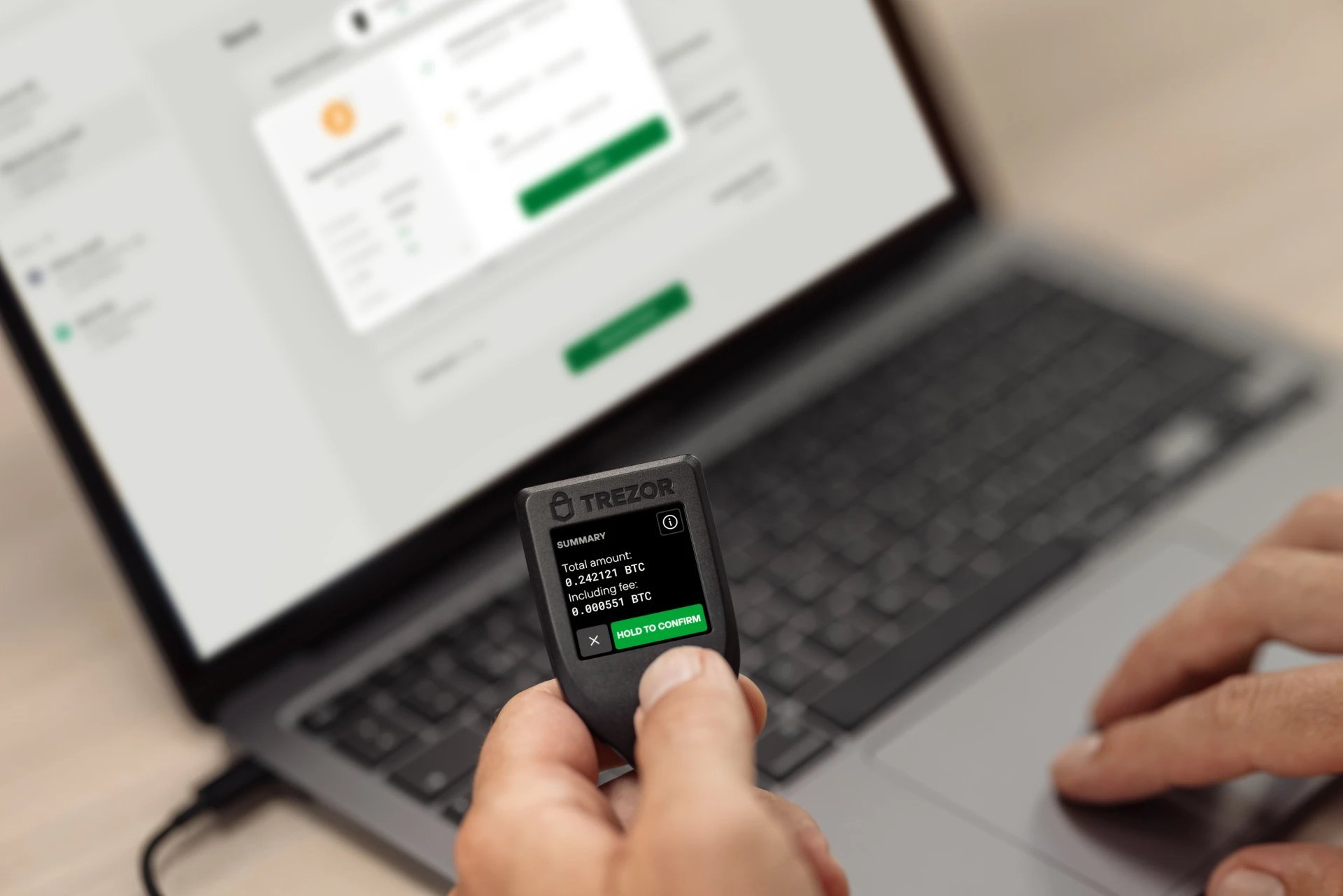
Trezor Safe 7 vs Trezor Model T
vs
At a Glance
How each wallet scores across key dimensions. Each axis is rated out of 5.
Ratings & Specs
4.8
Overall Rating
4.5
5.0 / 5
Security Rating
4.7 / 5
Hardware
Wallet Type
Hardware
Over 8,000 coins and tokens across dozens of blockchains including Bitcoin, Ethereum, Solana, and Cardano.
Assets Supported
Over 8,000 coins and tokens including Bitcoin, Ethereum, Cardano, Ripple, and Monero.
Highlighted cell = stronger result on that metric.
Key Security Features
Trezor Safe 7
- Open-Source TROPIC01 Secure Element
- Post-Quantum Cryptography Architecture
- On-Device Touchscreen PIN Entry
- BIP-39 & Shamir Backup (SLIP39) Support
- 100% Open-Source Firmware & Transparent Hardware Design
Trezor Model T
- On-Device Color Touchscreen PIN Entry
- Shamir Backup (SLIP39) Support
- BIP-39 Passphrase Hidden Wallets
- MicroSD Card Data Encryption
- 100% Open-Source Firmware Stack
Pros & Cons
Trezor Safe 7
Pros
- •World's first transparent, open-source TROPIC01 Secure Element
- •Post-quantum cryptographic architecture for long-term security
- •Vibrant color touchscreen with responsive haptic engine
- •Encrypted Bluetooth and USB-C for seamless desktop and mobile use
- •Native Shamir Backup (SLIP39) multi-share recovery support
Cons
- •Premium price point reflecting flagship hardware
- •Slightly larger form factor than minimal USB dongles
- •Bluetooth feature requires battery charging for wireless sessions
Trezor Model T
Pros
- •Color touchscreen enables on-device PIN and passphrase entry
- •Pioneered Shamir Backup (SLIP39) distributed key recovery
- •Fully open-source firmware and hardware architecture
- •MicroSD card slot for on-device encryption and microSD backup
- •USB-C connectivity
Cons
- •Higher price point compared to newer models
- •No Secure Element chip (relies on passphrase against physical attacks)
- •Touchscreen display is compact
Related Comparisons
Explore how Trezor Safe 7 and Trezor Model T compare against other top hardware and software wallets.