Trezor Model T vs MetaMask
ConsenSys
MetaMask
Our Take
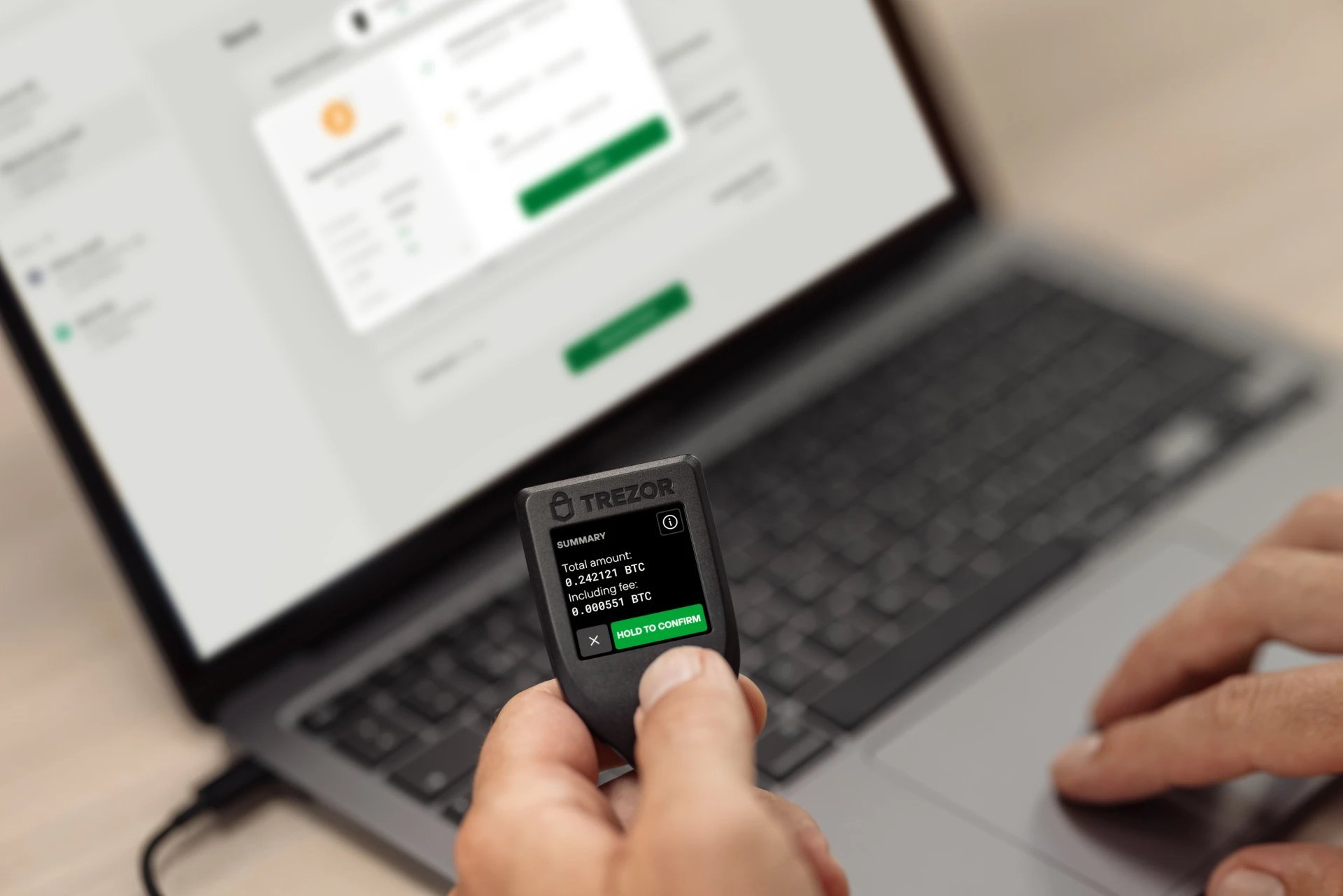
Not financial adviceThe Trezor Model T earns our top recommendation with a 4.6 overall rating and a 4.9 security rating. This hardware wallet secures over 8,000 assets, including Bitcoin and Monero, using offline storage. Its color touchscreen enables secure on-device PIN entry, while Shamir Backup (SLIP39) splits recovery shares to prevent single points of failure. Although its plastic build feels less premium, its open-source firmware provides verifiable transparency that software alternatives cannot match.
MetaMask is the best choice for active Web3 users, holding a 4.2 overall rating and a 3.8 security rating. As a free software wallet, it provides instant access to Ethereum, Polygon, and Arbitrum dApps. It lacks native Bitcoin support, but integrates with hardware wallets like Ledger to improve its security. While vulnerable to browser-based malware, its seamless transaction signing prompts and zero-cost setup make it the standard for daily decentralized finance interactions.
Security
Trezor Model T
Features a 4.9 security rating and Shamir Backup.
Asset Support
Trezor Model T
Supports over 8,000 assets including Bitcoin and Cardano.
Price
MetaMask
Free to download and use as a software wallet.
Usability
MetaMask
Offers seamless browser integration with Web3 dApps.
At a Glance
How each wallet scores across key dimensions. Each axis is rated out of 5.
Ratings & Specs
Highlighted cell = stronger result on that metric.
Key Security Features
Trezor Model T
- Shamir Backup (SLIP39) support
- On-device Touchscreen PIN entry
- Passphrase protection
- Open-source firmware
- FIDO2/U2F Authentication
MetaMask
- Seed phrase (recovery phrase) encryption and password protection.
- Transaction signing prompts for user confirmation.
- Hardware wallet integration (Ledger, Trezor) for enhanced key security.
- Optional automatic logout/lock features.
- Security warnings for suspicious website interactions.
Pros & Cons
Trezor Model T
Pros
- •Color touchscreen enables on-device PIN and passphrase entry, mitigating keylogger risks
- •First hardware wallet to support Shamir Backup (SLIP39) for distributed security
- •Fully open-source firmware and hardware design ensures transparency
- •Native support for a wider range of assets compared to the Model One (e.g., Cardano, Monero)
- •USB-C connectivity aligns with modern device standards
Cons
- •Significantly higher price point compared to entry-level hardware wallets
- •Touchscreen is relatively small, which can be difficult for some users
- •Plastic build quality might feel less durable than metal competitors
- •Lacks native iOS support due to Apple's USB restrictions
MetaMask
Pros
- •Dominant and widely supported wallet for the Ethereum and EVM ecosystem.
- •Seamless integration with thousands of dApps and DeFi platforms.
- •Easy switching between multiple EVM-compatible networks.
- •User-friendly interface for managing tokens and NFTs.
- •Supports hardware wallet integration (Ledger, Trezor) for enhanced security.
Cons
- •As a software wallet, it is inherently more susceptible to malware and phishing attacks than hardware wallets.
- •Limited native support for non-EVM blockchains (e.g., Bitcoin, Solana) without wrapping or bridging solutions.
- •Browser extension can be vulnerable if the host browser or computer is compromised.
- •Transaction fees (gas) can be complex for new users to understand and manage.