OWASP Smart Contract Top 10 (2025): A Guide to Understanding DeFi Risks
RateMyWallets is reader-supported. When you buy through links on this page, we may earn a commission at no extra cost to you.
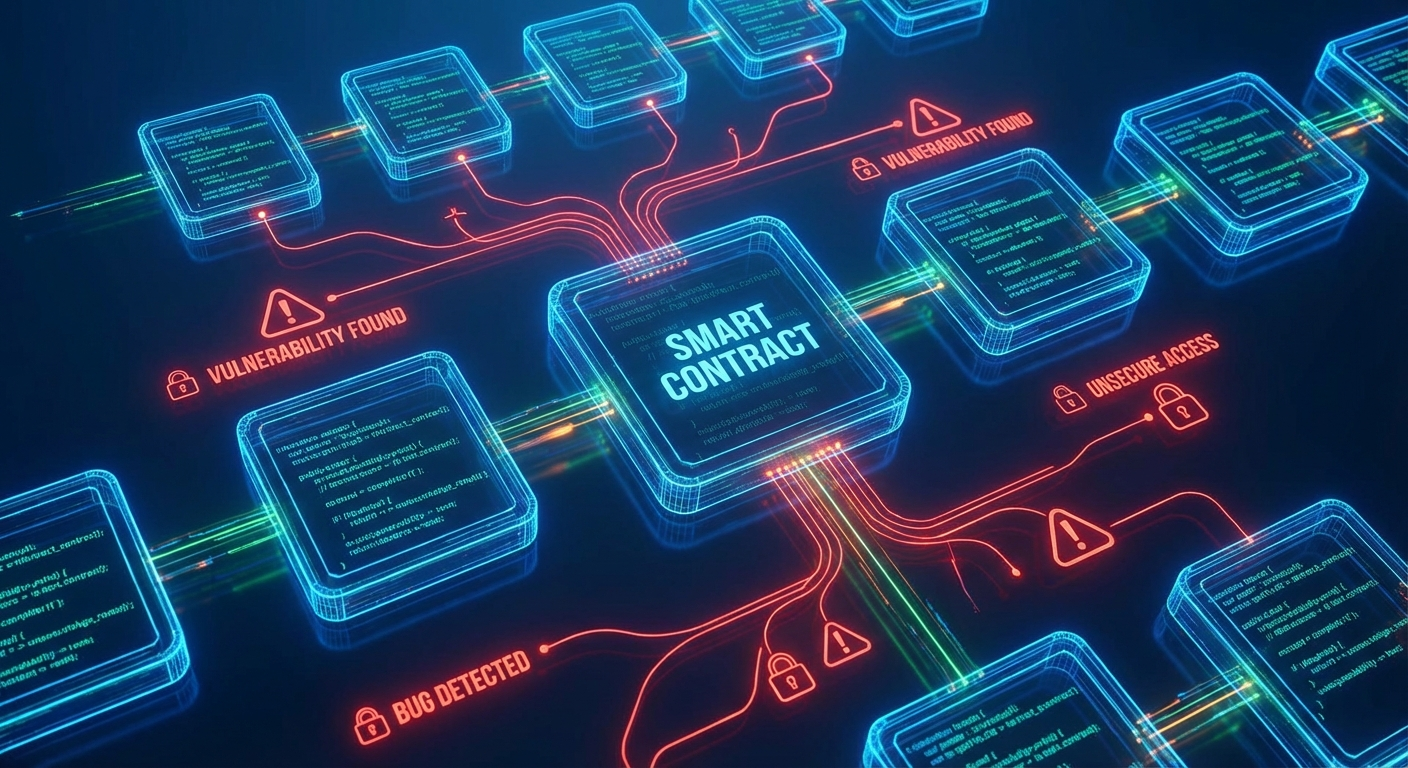
The Billion-Dollar Problem
The deceentralized web operates on smart contracts, but they come with a unique challenge: once deployed, they are immutable. This is one of the benefits of the blockchain. It also means that unlike traditional software, which can be easily patched, a smart contract vulnerability often remains permanent unless the code is upgraded via specific governance mechanisms. In 2024, this rigidity contributed to over $1.4 billion in losses. The OWASP Smart Contract Top 10 (2025) aims to curb these losses by ranking vulnerabilities based on frequency and damage. Let's take a look at the top threats of 2025.
The Top Threats of 2025
The landscape of attacks has shifted as the ecosystem matures. Here's some of the the key takeaways from the new report:
1. Access Control Vulnerabilities (SC01)
Topping the list is 'Access Control Vulnerabilities,' a category that accounted for a staggering $953.2 million in losses in 2024. These issues occur when a smart contract fails to properly restrict who can execute sensitive functions, leading to mis-authorizations, effectively handing the keys to the vault to malicious actors.
2. The Rise of DeFi-Specific Attacks
Reflecting the complexity of modern DeFi, the 2025 list introduces distinct categories for 'Price Oracle Manipulation' (SC02) and 'Flash Loan Attacks' (SC07).
- Oracle Manipulation involves tampering with the external data feeds that contracts rely on for pricing, allowing attackers to buy assets at artificially low prices.
- Flash Loan Attacks utilize uncollateralized borrowing to manipulate markets within a single transaction block.
3. Logic Errors and Beyond
Previous threats like Timestamp Dependence have been merged into broader categories like 'Logic Errors,' recognizing that fundamental coding mistakes remain a persistent threat. Other notable mentions include Reentrancy Attacks and Integer Overflow/Underflow.
How Users Can Protect Themselves
While the OWASP list is technical guidance for developers, it highlights a crucial reality for users: the code governing your assets carries risk. However, you are not helpless. While you cannot fix a smart contract, you can secure your access points. As always, do your research and evaluate any security audits associated with protocols being used.
Securing Your Digital Fortress
To mitigate risks, it is essential to adopt rigorous personal security hygiene. When interacting with DeFi protocols, the safety of your private keys is the one variable you can control entirely. We recommend using hardware storage solutions that prioritize transparency and physical security. For this, we like the
When evaluating a wallet to hold your long-term assets, look for these critical security features:
- On-Device Transaction Confirmation: Ensure your device allows you to verify the details of a transaction on its own screen before signing. This prevents malware on your computer from tricking you into signing a transaction you didn't intend to.
- Open-Source Firmware: Security through obscurity is a myth. Look for devices that use open-source firmware, allowing the global security community to audit the code for backdoors or vulnerabilities.
- Passphrase and PIN Protection: Your device should offer robust access controls. A strong PIN prevents unauthorized physical access, while an optional passphrase acts as a 'hidden wallet,' protecting your funds even if your seed phrase is compromised.
- Secure Bootloader: This feature ensures that the device only runs genuine, unmodified firmware, protecting you from supply chain attacks where a device might be tampered with before it reaches you.
Conclusion
The OWASP Smart Contract Top 10 is a reminder that we're just at the beginning of the crypto frontier. By understanding where the structural weaknesses lie, such as Access Control and Oracle Manipulation—and pairing that knowledge with robust personal security practices, you can participate in the Web3 economy with greater confidence and peace of mind.